

Late August in the Hamptons has a secret, and the regulars will only tell it to you sideways: the best week of the summer begins the day everyone else goes home. The Hampton Classic fills Bridgehampton through Grand Prix Sunday, all white tents and champagne and very beautiful horses, and then, almost on cue, the villages exhale.
Maybe you’re already holding that week, or still deciding whether late August warrants the trip at all. After ten Augusts out east, we can answer that one quickly: it does.
The Classic Splits the Month
Think of August out east as two months wearing one name. Through the third week, everything runs at full tilt — the farm stands picked clean by noon, the beach lots full by ten, dinner decided by whoever thought to book back in July. Grand Prix Sunday is the hinge. The crowds live and die by the holiday weekend; the Atlantic keeps its own calendar, warming for weeks behind the air. It peaks at seventy-two degrees — swimmer-warm, and holding — just as the last cars point home.
Labor Day falls as late as the calendar allows this year, which stretches the gap between the final jump and the holiday into nearly a full week. Ask anyone who summers here which days they’d keep if they could keep only seven, and you’ll get the same answer every time — the ones between the Classic’s last round and Labor Day. That week, the one no calendar bothers to name, is the one to hold.
The Beach Key
The sand below the tide line belongs to everyone; the road ends are another story. East Hampton Village releases its season permits — 3,100 of them — on a single February morning, and they vanish within days. August works with what remains, and what remains is plenty. Five hundred monthly permits release on the first of May (set an alarm; they move quickly). Weekday parking runs Monday through Thursday by app at Main Beach’s Lot 2 and Two Mile Hollow, and after six every evening the enforcement officers go home and the lots simply open. The last hour of light needs no sticker at all.
The classic newcomer mistake is jurisdictional. A town sticker doesn’t open a village gate, and the Atlantic Avenue lot in Amagansett answers to different paper than Main Beach (two miles west, a world apart). Southampton keeps its own grammar — day passes at the booth at Cooper’s Beach, lifeguards on until five. A sunset pass covers the town lots from five o’clock on, when the light turns to honey.
Or skip the question entirely and stay where the key comes with the room. The Maidstone hands its guests passes to Main Beach. At the Hedges Inn, a charming beach butler in pink drives you over in a vintage Land Rover and has the chairs angled before you arrive.
Bridgehampton and Sagaponack
Flat farm country, both of them, the light going wide over the corn rows — and between them, on Snake Hollow Road, the Classic’s ground. Mornings belong to the farm stands. Round Swamp Farm has been the Lester family’s land since 1721, and Carolyn Lester Snyder started the stand itself back in 1966 with a borrowed table and the week’s strawberries. The family still runs it, and the glorious prepared cases stock a rental house all week. This is what East Hampton is all about, and the line agrees (Lisa Niggles has baked the goods here for nearly forty years, and they go first). At Balsam Farms, founded by Alex Balsam and Ian Calder-Piedmonte, the sweet corn comes off the field daily and goes straight to the stand’s fire-roaster on August afternoons. The planting runs every week — sometimes every three or four days — so the ears are always at their peak. The Sagaponack General Store’s breakfast line moves faster than it looks. Go before eleven or go without.
Come evening, Topping Rose House — where Jean-Georges Vongerichten cooks out of the farm’s own rows — sends house cars down to the ocean, the permit question answered by never parking at all. On Fridays the Wölffer Wine Stand pours in the vines from five until the sun drops behind the rows — no reservation to chase — you take a cold glass and the longest, loveliest light of the week.
East Hampton and Amagansett
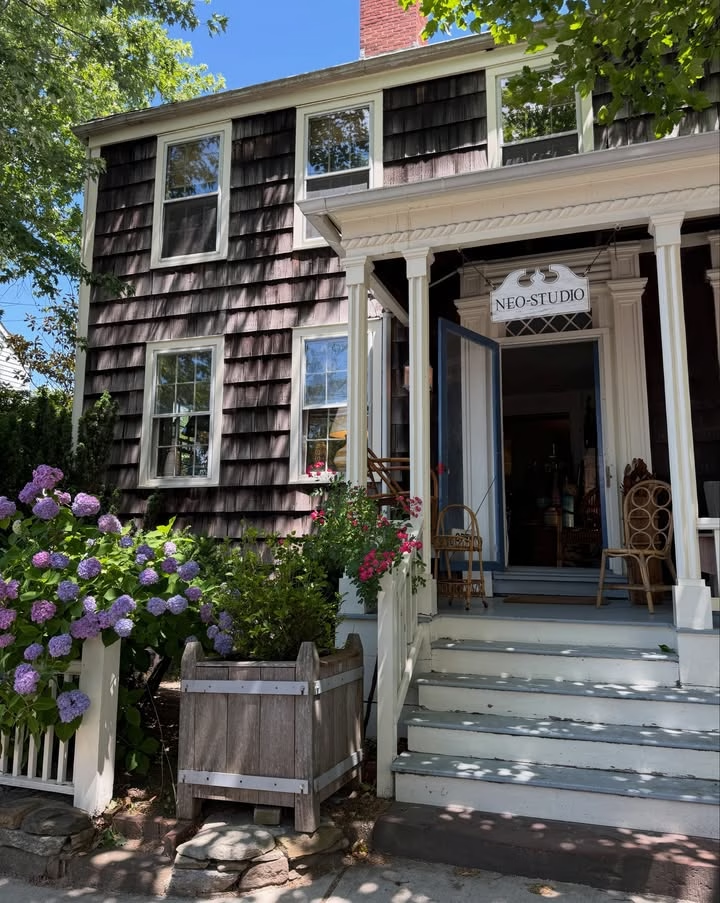
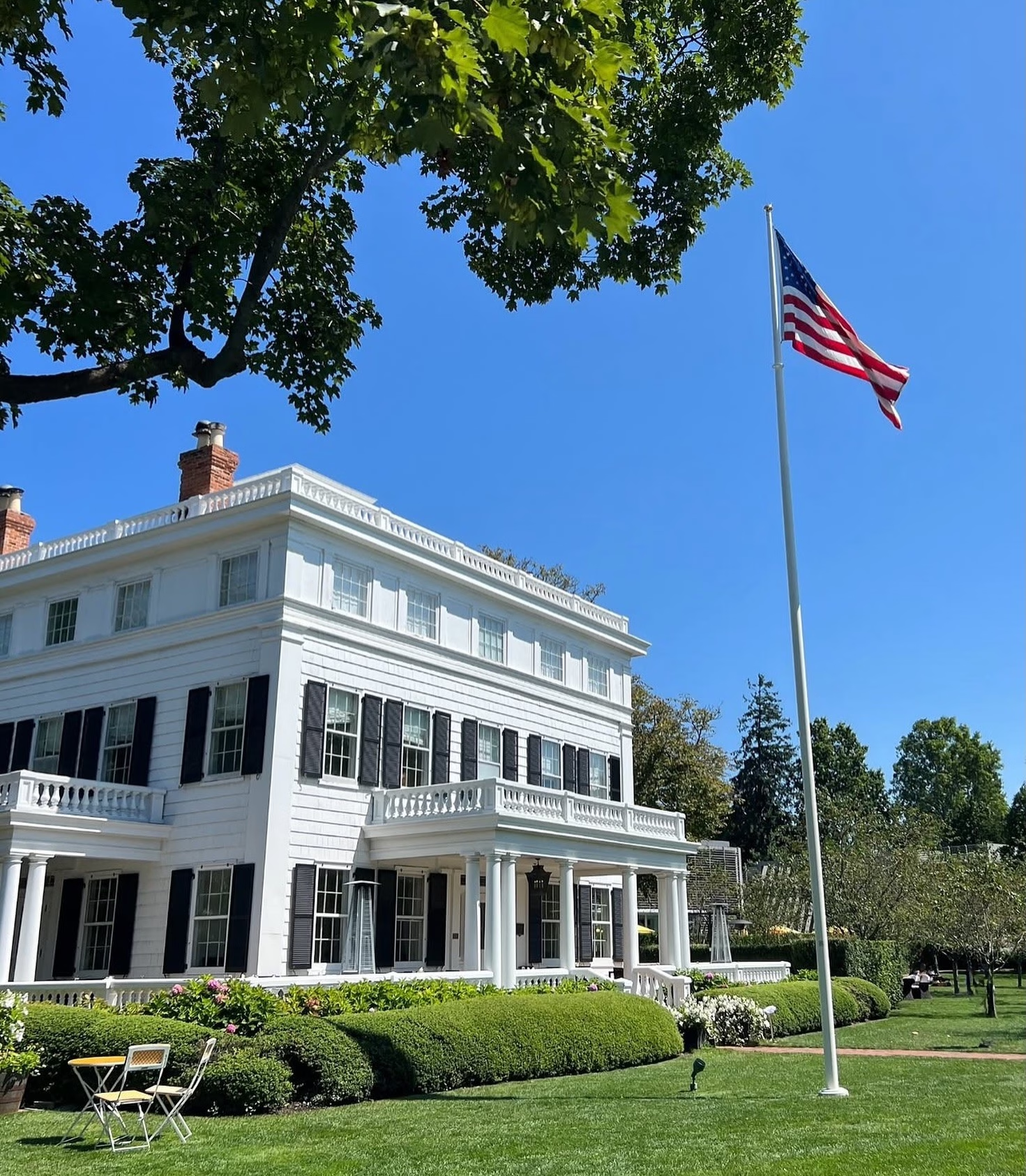
The swan pond still sits on the green, and Main Street has perfected looking unbothered. The Hedges Inn came back in June, twelve rooms redone by designer David Netto for Sarah and Andrew Wetenhall, the couple behind Palm Beach’s Colony Hotel. The hand-painted de Gournay mural in the lobby is a love letter to East Hampton. Downstairs, Swifty’s serves breakfast, lunch, and dinner seven days a week, and the bar is the move when the books look full.
The painters found this village first. The Tile Club was working these lanes as early as 1878, and the Morans built their studio cottage on Main Street six years later. The light that kept them here is the same light filling Guild Hall’s galleries all summer. Amagansett runs looser — the Atlantic Avenue town lot takes day parkers, and the long soft beach at the end of it does the rest, unspooling east toward the dunes.
Southampton
Southampton keeps the old-guard register and has never once needed to court anyone. Gin Lane holds its cottages behind tall hedges, the Bathing Corporation has kept its oceanfront since 1923, and the Meadow Club’s grass courts remain another world entirely. Cooper’s Beach — broad and beautiful, staffed, with chairs and umbrellas for rent on the sand (ask for the far end, nearest the dunes) — is the village’s door to the Atlantic. On a late-August weekday it comes as close as anything out east to a sure thing. Afterward, the lanes off Jobs Lane reward the aimless hour.
Sag Harbor
The whaling port that never became a resort. The captains’ houses still line the streets off Main, and the American Hotel, its cellar celebrated since 1981, still holds the evening hour. Ted Conklin — the proprietor in the navy blazer who greeted five decades of regulars — died in February, and his family carries the room on. Ask the bartender about the wine list; the list is the point. The beloved Beacon has watched the sun drop behind the moorings toward Shelter Island every summer since 1999, the light going copper as the glasses come out. The harbor gained 67 rooms on the water this season, every one of them at the new Faraway. Book the sunset side of the cove — and know that its restaurant, Zagara, goes dark on Mondays.
Montauk, for the Day
Keep Montauk as the reach, not the base. Go east in the late morning and let the day compose itself. First stop, the Lobster Roll on the Napeague stretch, where the sign has read LUNCH since 1965 and the line forms before the doors open. The American Dictionary of Food and Drink credits Fred Terry with inventing the cold lobster-salad roll right here. Ask him about it and he’ll cheerfully call it a lie. (Believe whichever version gets you to lunch faster.) Give the afternoon to the long, gorgeous beach, then the evening to Duryea’s — walk-in only, your name on the clipboard, the wait doubling as the sunset hour while the oyster bar pours and the sun drops over Fort Pond Bay. Back west by ten, with the whole night still young.
The Classic’s Quiet Middle
Grand Prix Sunday is the show’s public face — the reserved grandstand, the feature classes at ten-thirty and two, the one full-dress day. Go once; it earns it. The horse world’s own days are Tuesday through Thursday, when the stands sit open, the hunter rounds run all morning, and grooms outnumber spectators along the schooling rings (they’ll nod you toward the best one if you ask). Arrive for the eight o’clock start, coffee in hand, and watch the Grand Prix horses loosen up in Wednesday’s jumpers with almost nobody beside you. Monday is the quiet day — boutiques open, competition dark. The Classic Club takes individual bookings Thursday through Sunday for a base at ring’s edge, while the week-long tables in the VIP tents move by sponsorship, arranged months ahead. The show itself is younger than its fences suggest: revived on a Sagaponack field in 1971, renamed seven years later, on this ground since 1982. Old exhibitors still talk about the 1976 edition at Dune Alpin, the one that ran straight through a hurricane.
The Tables Release Thirty Days Out
Nick & Toni’s has run on a wood-burning oven since 1988, and its tables release on Resy exactly thirty days ahead. The exhale week has been bookable since the first days of August, and the regulars knew it. The bar seats are the walk-in grammar, and the room goes dark on Tuesdays. East Hampton Grill keeps roughly the same horizon (the biscuits have their own following, and the following is right). Other evenings want other registers: the 1770 House for the inn dining room, Le Bilboquet in Sag Harbor for the room that runs on recognition, Rowdy Hall in Amagansett when the night calls for a booth.
The Art, Between Swims
The painters who gave these villages their standing are still on view, if you mind the days. The Parrish keeps the colony’s collection in Herzog & de Meuron’s long barn of a building in Water Mill, closed Tuesdays and Wednesdays — aim for the back half of the week. In the Springs, the Pollock-Krasner House runs small tours by reservation, the barn floorboards still carrying the paint. Dia Bridgehampton keeps Dan Flavin’s light works in the old firehouse, free to walk into, Friday through Sunday. And LongHouse, Jack Lenor Larsen’s sixteen garden acres, opens Wednesday through Sunday afternoons — with one catch on your week: it closes August 28 through 30, so go midweek.
The Friday Wall
By two on a Friday the Long Island Expressway has stopped pretending to be a road, and by seven it is one again. Leave the city at eleven in the morning and the run takes a little over two hours; leave at four and it can take five. The workarounds are known quantities by now. The Cannonball leaves Penn Station at 4:07 on Thursdays and Fridays (the Thursday departure is the insider’s), runs express to Westhampton and then down the line, and fills weeks ahead, all season through Labor Day weekend. Blade flies through September 8, about thirty-five minutes in the air. Coming home on Sunday, obey the same law in reverse: on the road by two, or after seven.
The Week to Keep
Build the week loosely and let it breathe. A schooling-ring morning before the Classic ends, a farm-stand run before eleven, the long afternoon on whatever sand your key opens, one grand table, one walk-in counter, a Friday evening in the vines, and a perfect evening swim every day. Save the last hour for the beach — after six the lots open, the water holds its warmth, and the light stretches the whole amber length of the shore. The only decision left is where to sleep, and which village to wakeup in. The Hamptons stays edit takes that up next.
The arrangements
- The Classic runs August 23-30 on Snake Hollow Road in Bridgehampton; the grandstand is open seating every day but Grand Prix Sunday, and the Classic Club books Thursday through Sunday.
- The beach key — East Hampton Village’s monthly permits release May 1 and move quickly; weekday day parking at Main Beach Lot 2 and Two Mile Hollow runs Monday through Thursday by app; Southampton answers with day passes at Cooper’s Beach and a town sunset pass from five.
- The tables — Nick & Toni’s releases on Resy thirty days ahead; Swifty’s serves seven days a week; Duryea’s is walk-in only, season through September.
- The crossing — the Cannonball leaves Penn Station at 4:07 on Thursdays and Fridays through Labor Day weekend; Blade flies through September 8.
- The museums — the Parrish closes Tuesdays and Wednesdays; the Pollock-Krasner House tours by reservation; LongHouse closes August 28-20.