
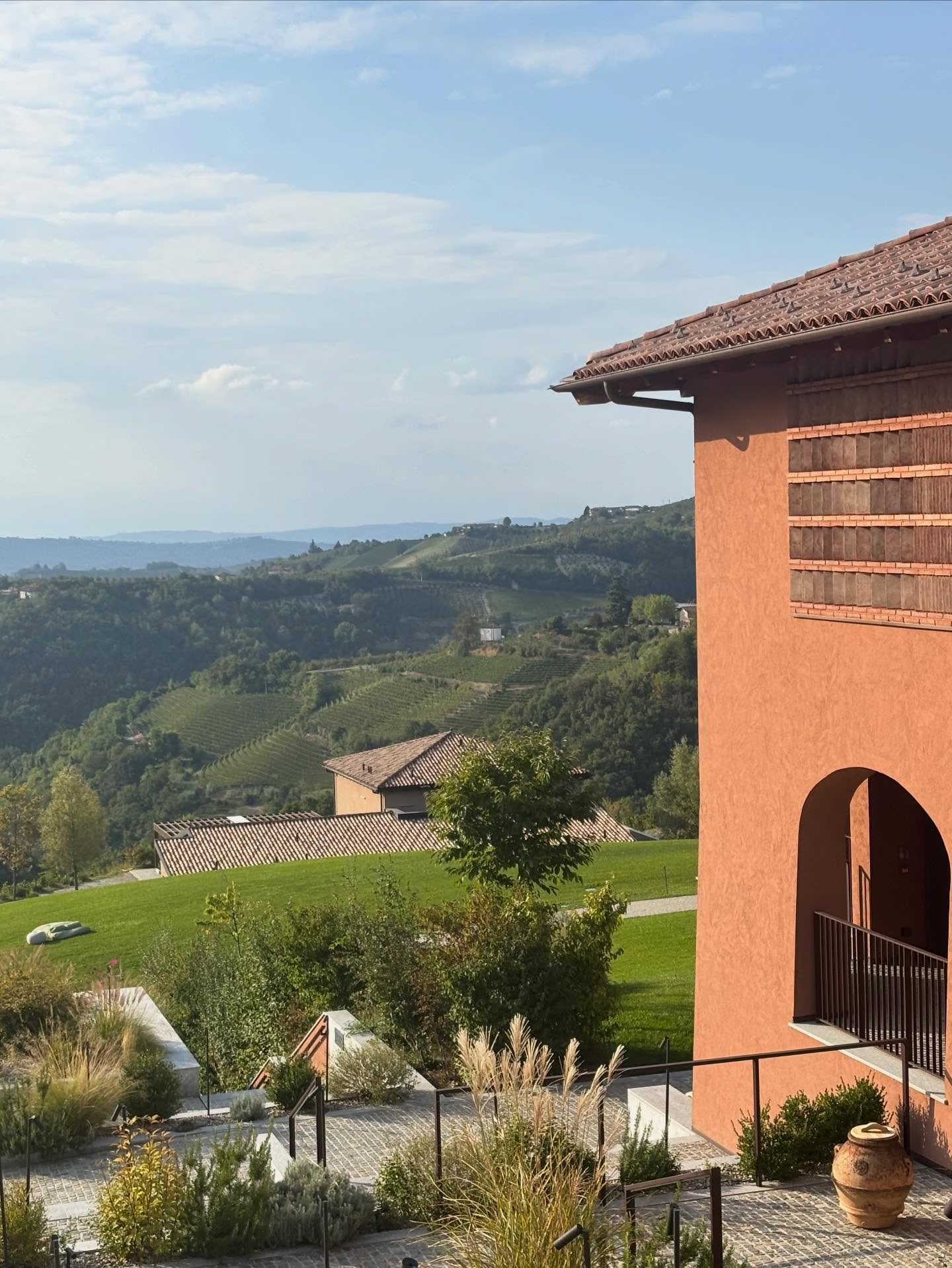
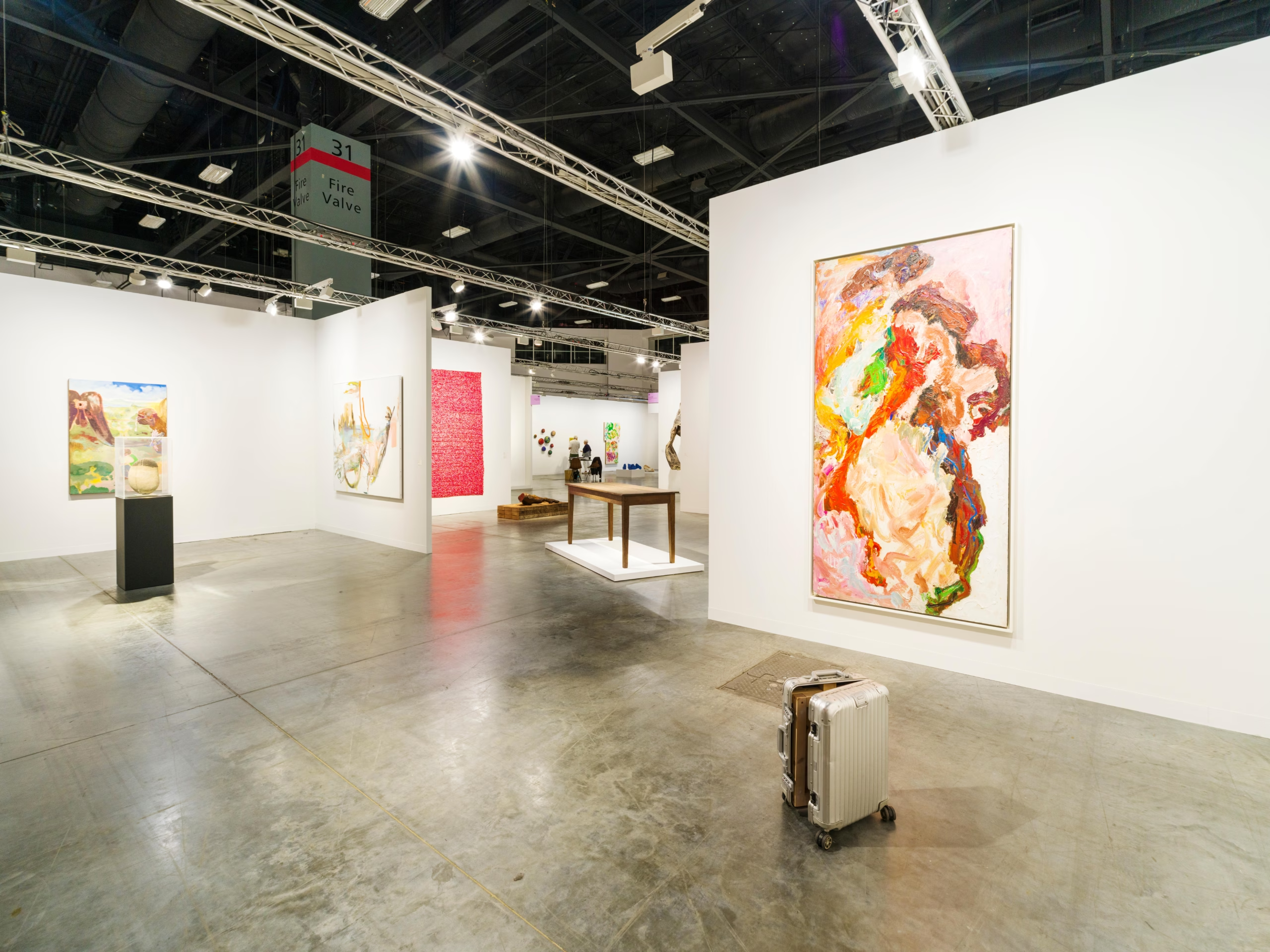
Italy’s newest three-star belongs to a country house. When the Michelin Guide’s Italian edition raised its fifteenth table to the top rank in November — La Rei Natura, twenty-six months from first service, a pace the national trade calls without precedent — the kitchen stood not in a city but inside Il Boscareto, a forty-nine-room estate on its hilltop above the Serralunga vines. The hills hold two tables at that altitude now, one on a corner of Alba’s center and one inside the largest of these country houses. And the houses are the point. Between the Barolo villages and the Alta Langa rim, the region’s serious beds are estates and cascine of eleven to forty-nine rooms apiece, counted in rooms rather than wings, where the vineyard is the address and the cellar outranks the lobby. Their autumn goes to whoever asked first, and the asking has dates. An estate among the vines is how the Langhe is done.
Where you sleep decides what kind of evening you get, and the distances deceive. Everything here is twenty or forty minutes from everything else, yet a night in Alba and a night above a cru end differently: the town holds perhaps a thousand rooms in a comfortable four-star key and keeps the market on its doorstep, while the country keeps the dark, the dogs, and the fog line. That fork closes fast in autumn — you are either above the fog at breakfast or inside it. The Barolo side is the deep end: one hundred eighty-one delimited crus, the menzioni geografiche aggiuntive written into law in 2010, climbing between eleven villages with the estates set straight into them. A bottle that names Cerequio or Bussia is making a legal claim; one that just says cru is making an atmosphere. The Alta Langa rim rides higher, longer views, hazel between the vines. The Roero watches all of it from the far bank of the Tanaro. Barbaresco, with sixty-six crus of its own, keeps its beds small: bed-and-breakfasts, agriturismi, six-suite houses, nothing at this scale on that side. The knowing sleep Barolo-side or on the rim and give Barbaresco its day, anchored by lunch at La Ciau del Tornavento in Treiso, one star, Maurilio Garola’s kitchen. Distance is minutes here. Evenings are the geography.
Serralunga first, because the news sleeps there. Il Boscareto is the odd one out among these houses — built new in 2009 by the Dogliani family rather than coaxed out of a cascina, then renovated and grown by ten rooms in 2023 to its present forty-nine — which is why it runs to glass and long sightlines where the region restores stone. The new build bought scale. Scale carried the table: La Rei Natura is Michelangelo Mammoliti’s, three stars in November, and Sunsì, the bistrot now in Capalbo’s hands, covers the nights around it. The rooms sort by what they face — only some of the suites carry terraces onto the vines or toward the village, and that handful is the ask; Deluxe rooms and Junior Suites interconnect for parties traveling as one; the spa runs to guests from eight to eight. One fact shapes any December plan: the house keeps a season, reopening this year on March 27, so the fair’s last weekends want the closing date confirmed before anything is written down. Nights run from €565 through the fair’s two months, €630 to €695 across the opening days, every fair weekend held to two nights; after the final market Sunday the entry rate settles toward €440.
Eleven suites hold the lip of Cerequio itself. Palás Cerequio — palás is Piedmontese for a noble palace — is an eighteenth-century borgata the Chiarlo winery brought back above the natural conca between La Morra and Barolo, whose southeast-to-southwest bowl and Tortonian marls are why the wine is what it is. The amphitheater outside the windows is the vineyard’s own logic, not scenery. Four Past suites keep to the palazzina; seven Futuro suites each carry a private wellness area. For November, hold the Futuro seven. Downstairs, a caveau of six thousand bottles guards Lorenzo Fantini’s 1879 Monografia, the volume that first mapped these hills, and La Corte — Vincenzo La Corte’s unstarred table — cooks a short walk from the cellar that explains the address.
A working winery shares the hill at Réva, Monforte — twelve rooms plus freestanding suites, a spa sunk into the old cellars, two pools. Monforte is also the village to eat in: Fre, the estate’s table, holds a star under Francesco Marchese, and Borgo Sant’Anna in the village holds another. Book the table with the room. The serious kitchens here run on horizons of months. Nights start at €243 in September, €365 on the fair’s early weekends and €409 by mid-November, the auction weekend already sold out, the final pair easing to €255.
Seven terraced floors step down an Alta Langa hillside at Casa di Langa: thirty-nine rooms in local materials by GaS Studio with Parisotto+Formenton, every room with a terrace of its own. It exists because Kyle Krause kept driving past a half-built carcass on the road from his Monforte house and finally bought it at auction, which is why an American group owns the Alta Langa’s design estate and why the cellar pours Vietti and Enrico Serafino, the two Piedmont houses in the same hands. What the booking engine will not tell you: Classic and Deluxe rooms share the same thirty-three to thirty-six square meters, but the Deluxe owns the Serralunga valley view and the larger Junior Suites do not — pay for the aspect, not the floor plan — and twins exist only in Classic and Junior Suite. No elevator reaches the pool or garage. The terraced plan trades steps for views, so the house runs a buggy and a valet instead, worth knowing with a stiff knee or a heavy case. Fàula — “tale” in Piedmontese, the story told at the fire after work — serves the house and outside diners alike, lunch and dinner daily, with Francesco Clerico on the pass these days.
A jug of water still waits at the door of Villa d’Amelia — l’acqua di Amelia, the Bonelli family’s welcome carried on by the Barberis family, whose nineteenth-century Cascina Bonelli at Benevello has grown to thirty-seven rooms. Courtyard rooms trade view for stillness. Ridge rooms take the Alps and, on a rinsed-clear day, Turin’s Mole on the horizon. The kitchen has been Dennis Cesco’s since 2021 — DaMà for the tasting menus, a bistrot beside it — and it holds no star at present; the house’s stated aim is to bring one back. Thirteen kilometers of ridge road put Alba close enough for the market and far enough for the dark. September nights run from €297, the fair’s final weekend from €225, and every earlier fair weekend had already sold out by mid-August.
Across the Tanaro stands the honest outlier. Castello di Guarene, the Counts of Roero’s eighteenth-century summer palace, sleeps twelve rooms by the palace’s own sheet — eight on the third floor, four at garden level, thirty-five to one hundred sixty square meters, so read the floor and the meters, not the names — with the original Chinese tapestries still on the walls and a spa cut into the rock beneath. The bank matters. The classic postcard of the Langhe is taken from this side of the river, which means a stay here buys the view of Barolo rather than the waking inside it. Bought as the Roero, it delivers as the Roero — the top lot at last autumn’s Grinzane auction, a shade over a kilo, hammered to Hong Kong, was dug in Roero ground.
And Pollenzo, at the territory’s edge, is the counterpoint with a pedigree. The Albergo dell’Agenzia’s forty-seven rooms occupy Carlo Alberto’s 1830s model farm, a royal agricultural estate restored from 1997 that shares its neogothic quadrilateral with a university of gastronomic sciences and a national wine bank, its rooms named for the crus. Pollenzo sits on the Savoy royal-residences UNESCO listing of 1997 — a different inscription from the 2014 one the vineyard landscape carries, so the ground is heritage twice over by different routes. Bra and Alba sit minutes away. It is the base for a market-first weekend: towns at arm’s reach by day, the royal quadrangle after dark. Nights hold near €139 in September and €154 on the auction weekend itself, the narrowest seasonal spread in this edit.
Now the dates, because everything else follows from them. The fair that fills these hills runs its ninety-sixth edition from October 10 to December 6, nine Saturday-and-Sunday pairs, and only the pairs: the Mercato Mondiale opens on weekends, and midweek the towns go back to their own errands. The early weekends run smaller and easier; supply, price, and crowd all crest from late October into mid-November: the trade’s own reading has the cold arriving later each year, dragging the peak toward the auction’s Sunday, held this year on November 8 at the castle of Grinzane Cavour and joined on invitation at one in the afternoon. No ticket exists. Under all of it sits a short arithmetic: eleven to forty-nine rooms a house, nine weekends, and a habit of booking early that the territory’s own numbers document. A year ahead, operators’ books already hold a fifth to a quarter of the season, twice the share of the year before; the wanted houses are spoken for by June; by August the fair weekends have filled outright, at roughly double the shoulder rate. Summer, for the record, has overtaken autumn across the territory’s year — 46.6 percent of nights against 37.3, by its own count — and none of that adds a single fair-weekend bed. Alba’s own paper, surveying the last crush, put the mechanism in one line: this is not Tuscany — in Langa, the spaces are small.
The early room buys the weekend itself. Saturday morning in the Cortile della Maddalena, the Commissione Qualità’s judges at their tables before and after every sale, a trifola weighed and priced off the borsino — €4,000 a kilo at the posted rate by mid-October last season, and always by pezzatura, since a large piece re-prices the gram — and then the short drive back up, the fog thinning over the crus, to a hill whose name is on the label waiting downstairs.
Choose the bank, then the house, then the room by what it faces. Decide while the vines are bare. By the first weekend of November the fog sits below the breakfast windows, the market is a day away, and the table that made November’s news is under the same roof as the bed. What the weekend itself should hold — which market morning, which tables in which villages, the hours between — is its own piece, and the next due from these hills: seventy-two hours in Alba, timed to the fair.
The arrangements
- Every house in this edit books direct on its own site; fair-weekend rooms fill by late summer, at roughly double the shoulder rate.
- Il Boscareto, Serralunga d’Alba — seasonal, reopened March 27; confirm the closing date before writing a December weekend.
- Fiera Internazionale del Tartufo Bianco d’Alba — market weekends, October 10–December 6; fieradeltartufo.org.
- White truffles sell at the weekend market under the Commissione Qualità, priced by the posted borsino and by pezzatura.
- The hills assume a car — hire in Alba; the road’s minutes run longer than the map’s.